Everyone knows that a dentist check-up is a very good thing to do at least once a year. Prevention pays off on long term.
When dentists inspect the teeth, gums, bite, soft tissues, teeth coloring & alignment, signs of teth grinding, x-rays, and so on, what do they compare with? As a side note, every time we inspect something, we compare visually and conceptually with a predetermined image and principle, in a dentist's case, with what the dentist learned during his training, whether that happened in dental school or the latest attended lecture in a congress. However, it is almost impossible for a dentist to compare precisely the current status with a patient's teeth shape, alignment, size, etc., from a year ago, no matter how detailed their records are.
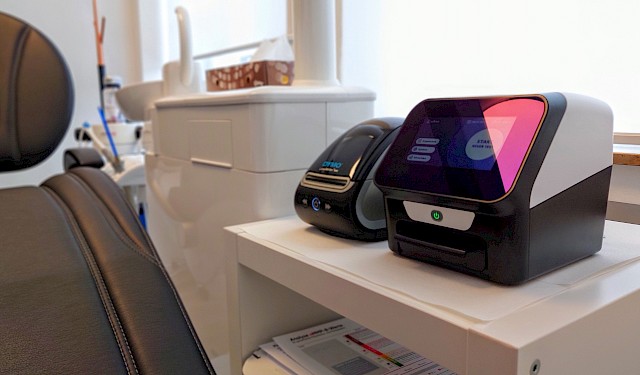
How does a dental check-up looks like in 2026?! Take a look:
Intra-oral scanning reached new heights of precision and computing capabilities. It is possible to compare within micron precision multiple scans over time, extract trends, analyze them with a.i. and understand the risk factors long before pathology is actually visible to the naked eye.
For children, this technology is particularly important since we can intercept and guide their growth for a harmonious and beautiful development using non-invasive methods such as myofunctional orthodontics (Myobrace).
The 3D optical scanner is our digital eye that does not miss anything, even detecting developing caries in between the teeth. We used them for our patients during the yearly check-up together with the saliva microbiome analysis, 3D radiography (DVT - digital volume tomography), bite & joints analysis and autofluorescence detection (precancerous lesion screening with Velscope Vx).
But the most valuable aspect of these technologies is not that we have/use them or what can be visualized; it is what our patients can learn out of them for the purpose of preserving teeth, gums, soft tissues, ensuring minimally invasive preparations when restorations are needed, and detecting very early trends towards inflammaging - the culprit for premature aging.
Vitamine D, the Immune system, and not only
Vitamin D, should I take supplements, is nutrition rich enough in Vit D, does it help against cancer… it is a hot subject nowadays with studies pros and cons. According to #ZOE chief scientist Dr. Sarah Berry, balanced nutrition and maybe a multivitamin supplement should be enough. A Vit D-specific supplement might be helpful during darker months if you live in an environment with less available sun. Yale University’s scientists (https://www.yalemedicine.org/news/vitamin-d-myths-debunked) also agree that too many supplements of Vit. D is not healthy; too much sun (through exposure to UVB light, the skin generates its own Vit D) increases the risk of melanoma. For a healthy individual, 600 IU per day as a supplement is fine; for those over 70 years of age, 800 IU is fine (especially women due to menopause). Are you eating Vitamine D fortified foods (soy, almond or oat milk, rainbow trout, sockeye salmon…)?! Then, you might not need supplements.
How about the teeth, gums, the mouth — where does systemic health start? A deficiency of Vit.D increases the risk of tooth caries and gum inflammation. Especially for children, it can lead to deficient mineralization of developing teeth due to a deficient Calcium and Phosphate balance in the body. (Vitamin D Deficiency and Oral Health: A Comprehensive Review. Nutrients. 2020 May 19)